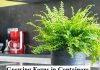
Container gardens let you grow flowers, herbs, and vegetables on patios, balconies, and steps. Success depends on the container, the soil, drainage, and regular watering.
Choose the Container
Pick containers with drainage holes and enough volume for the plants. Larger pots hold moisture longer and need less frequent watering. West Virginia University Extension advises that adequate drainage is essential, and that holes can be drilled into the bottom of a container if needed (West Virginia University Extension).
Use Potting Mix, Not Garden Soil
Use a quality potting mix rather than garden soil. Garden soil is heavy and can compact in a pot, limiting the oxygen that reaches the roots. A potting mix is lighter and looser, and it usually includes vermiculite or perlite for aeration (West Virginia University Extension). Refresh the mix each year or replace part of it. Clemson Extension suggests a homemade blend of one part peat moss, one part potting soil, and one part coarse sand or perlite, plus slow-release fertilizer, and says containers should be at least 6 to 8 inches deep for adequate rooting (Clemson Home and Garden Information Center).
Plan the Planting
Combine a tall focal plant, a mid-height filler, and a trailing edge plant. Group plants with similar light and water needs, and choose compact or container varieties for vegetables.
Water and Feed
Containers dry out faster than in-ground plants. In hot, dry, sunny weather, they may need water daily or even twice a day, and Clemson advises checking them at least once a day and twice on hot, dry, or windy days (Clemson Home and Garden Information Center). Feel the soil, water when it is dry, and keep watering until water drains from the holes (West Virginia University Extension). Container plants often need more fertilizer than in-ground plants. A slow-release fertilizer may be enough once a year, and liquid fertilizer can be applied about every three weeks (West Virginia University Extension).
Maintenance
Deadhead flowers, remove yellowing leaves, and check containers regularly for pests. Flushing salts from the soil once a year by running water through the pot until the runoff is clear helps prevent salt buildup (West Virginia University Extension).