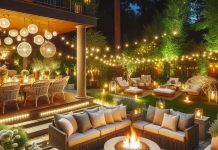
Backyard landscaping pictures are most useful when you sort them by what you want the yard to do: host dinners, block a view, grow food, save water, or keep kids busy. Below are 12 picture-worthy backyard ideas organized by goal, each with typical dimensions, plant choices by US region and hardiness zone, a budget tier and an honest maintenance rating, so you can tell which photos will actually work in your own yard.
If you want a broader overview of backyard design styles, see our guide to landscaping ideas for backyard spaces. This article focuses on turning inspiration photos into a plan that fits your space, climate and time.

How to Read a Backyard Landscaping Picture Before You Copy It
A great photo hides a lot of information. Before you save another image, check it for these five things:
- Scale. Count pavers, fence boards or chairs to estimate the real size of the space. Many magazine yards are far larger than a typical suburban lot, and a design that looks airy in a photo can feel crowded when shrunk to fit.
- Climate. Look for clues such as palms, cacti, birches or lush lawns. A Southern California courtyard and a Minnesota backyard need very different plants, even if the layout is the same.
- Sun and shade. Note where the shadows fall. Flower-filled borders and vegetable beds usually sit in full sun (six or more hours of direct sun a day); ferns and hostas usually signal shade.
- Hardscape versus plants. Separate the built parts (patios, walls, paths, pergolas) from the planting. The hardscape sets the layout and most of the budget; plants can be swapped for regional equivalents.
- Hidden maintenance. A perfectly clipped hedge, weed-free gravel or a crystal-clear pond is the result of regular work. Ask yourself whether you want to do that work every week.
Once you know what a picture is really showing, you can borrow its layout or mood and replace anything that does not suit your yard.
Backyard Ideas at a Glance
Use this table to shortlist ideas before reading the details. Budget tiers are relative: Low is mostly plants, mulch and DIY labor; Moderate adds materials such as pavers, lumber or a small pump; High usually involves heavy hardscape, excavation, electrical work or hired crews. Costs vary widely by region and material, so get local quotes before committing.
| Idea | Best for | Typical size | Plant picks (zone/region) | Budget tier | Maintenance |
|---|---|---|---|---|---|
| Dining patio with containers | Entertaining | About 10 x 10 ft for 4 diners; 12 x 14 ft or more for 6 to 8 | Boxwood (zones 5 to 9), lavender (5 to 9), annuals anywhere | Moderate to High | Low to Medium |
| Fire pit circle | Evening gatherings | Seating circle about 12 to 16 ft across | Ornamental grasses such as little bluestem (zones 3 to 9) kept well back from the fire | Low to Moderate | Low |
| Living privacy screen | Blocking views and noise | Strip 4 to 8 ft deep along a property line | ‘Green Giant’ arborvitae (zones 5 to 7), wax myrtle (7 to 10, Southeast), eastern red cedar (native over much of the East) | Low to Moderate | Medium |
| Native pollinator border | Wildlife and color | Bed at least 4 to 6 ft deep | Purple coneflower and butterfly weed (zones 3 to 9); penstemon in the West | Low | Low once established |
| Raised-bed kitchen garden | Growing food | Beds 3 to 4 ft wide, 10 to 12 in deep or more | Tomatoes, peppers, herbs, leafy greens; varieties chosen by season length | Low to Moderate | High in season |
| Low-water gravel garden | Dry climates, water savings | Any size; works in small areas | Agave, desert marigold, blackfoot daisy (Southwest); yarrow and sedum elsewhere | Low to Moderate | Low |
| Woodland shade garden | Areas under trees | Follows the tree canopy | Hostas and ferns (zones 3 to 9), heuchera, cast-iron plant (7 to 11, South) | Low | Low |
| Garden path and stepping stones | Connecting zones | Main path 4 ft wide; side paths 2 to 3 ft | Creeping thyme between stones in sun (zones 4 to 9) | Low to Moderate | Low |
| Small pond or water feature | Focal point, calming sound | Bubbler 2 to 3 ft wide; pond 18 in deep or more if keeping fish in cold regions | Water lilies, pickerelweed, marsh marigold (varies by zone) | Moderate to High | Medium |
| Kids’ play zone | Families | Equipment plus at least 6 ft of clear space on all sides | Tough lawn grasses suited to your region around the edges | Low to Moderate | Low to Medium |
| Rain garden | Soggy spots and runoff | Shallow basin 4 to 8 in deep, at least 10 ft from the house | Swamp milkweed, blue flag iris, switchgrass (much of the East and Midwest) | Low | Low once established |
| Low-voltage landscape lighting | Using the yard after dark | Path lights often 6 to 10 ft apart | Uplight specimen trees or ornamental grasses | Moderate | Low |
Ideas for Entertaining
1. Dining Patio Framed With Container Plants

The classic backyard picture is a table under string lights, surrounded by big pots of flowers and herbs. To make it work, size the patio for the furniture first. A common rule of thumb is to leave about 3 feet between the table edge and the patio edge so chairs can slide back. That puts a four-person table at roughly 10 x 10 feet and a six- to eight-person table at 12 x 14 feet or more.
Containers let you copy the lush look of a photo without digging new beds. Group pots in odd numbers, mix heights, and use at least one large container (18 inches across or more) so the arrangement does not look scattered. Boxwood and lavender hold their shape in zones 5 to 9; annuals such as petunias, coleus and sweet potato vine fill in anywhere during the warm season. For paver, stone and concrete options, see our overview of backyard hardscape projects and materials.
Maintenance: Containers dry out faster than beds and may need daily watering in midsummer heat. A drip line or self-watering pots reduce the chore.
2. Fire Pit Circle
A fire pit gives a yard a reason to be used on cool evenings. Most fire pits are 3 to 4 feet across. Add 2 to 3 feet of space for legs and feet, then room for chairs, and the full seating circle usually ends up about 12 to 16 feet in diameter.
Place it on a non-combustible surface such as gravel, pavers or stone. Many jurisdictions and homeowners associations set minimum distances from houses, fences, decks and overhanging branches, often in the range of 10 to 25 feet, and some restrict wood burning altogether. Check your local fire code before you build. Keep plantings low and well back from the fire, and avoid resinous evergreens such as juniper right next to the pit.
Maintenance: Low. Clear ash, keep weeds out of the gravel, and cover the pit when not in use.
Ideas for Privacy
3. Living Privacy Screen
Pictures of secluded backyards nearly always rely on a layered screen: a fence or tall hedge at the back, mid-sized shrubs in front, and perennials at the base. Layering looks more natural than a single row and keeps the screen effective if one plant fails.
Choose screening plants by region:
- Northeast and Midwest: ‘Green Giant’ arborvitae (zones 5 to 7), eastern red cedar, and native viburnums such as arrowwood.
- Southeast: wax myrtle (zones 7 to 10), cherry laurel, and American holly.
- West and Southwest: ‘Spartan’ juniper in dry, sunny yards; in mild coastal areas, consider pittosporum or native shrubs such as toyon in California.
Check the mature width on the plant tag and space plants so they just touch at maturity rather than crowding each other. Many towns limit backyard fence height, often to about 6 feet, so confirm local rules before you combine a fence with a hedge. If you prefer an open, country look over a solid wall, our article on rustic split rail fence landscaping ideas shows how to soften a low fence with planting.
Maintenance: Medium. Expect watering for the first one to two growing seasons and occasional shaping. Formal clipped hedges need trimming at least once or twice a year.
Ideas for Wildlife and Color
4. Native Pollinator Border

Meadow-style borders full of coneflowers and grasses are some of the most photographed backyard looks, and they are also among the easiest to maintain once established. Make the bed at least 4 to 6 feet deep so you have room for several layers, and plant in drifts of three to five of each plant rather than single specimens.
Regional starting points:
- Midwest and Northeast: purple coneflower, butterfly weed, black-eyed Susan, New England aster, little bluestem.
- Southeast: American beautyberry, coral honeysuckle on a trellis, swamp sunflower, mountain mint.
- Southwest: penstemon, desert marigold, globe mallow, agastache.
- Pacific Northwest: red-flowering currant, Oregon grape, camas, sword fern for shady edges.
- California: California poppy, ceanothus, native salvias, yarrow.
Your state native plant society or cooperative extension service can tell you which species are native to your specific area.
Maintenance: Low once established. Leave seed heads standing over winter for birds and cut back in late winter or early spring.
Ideas for Growing Food
5. Raised-Bed Kitchen Garden
Neat rows of raised beds look tidy in pictures and are practical in real yards. Build beds 3 to 4 feet wide so you can reach the middle from either side without stepping on the soil, and at least 10 to 12 inches deep; deeper beds suit root crops and poor native soil. Leave paths at least 2 feet wide, or about 3 feet if you need room for a wheelbarrow.
Put the beds where they get at least six to eight hours of direct sun, close enough to a water source that watering is easy. Choose varieties suited to your season length: gardeners in short-season northern areas often pick early-maturing tomatoes, while Southern gardeners can plant two cool seasons (spring and fall) for greens and brassicas.
Maintenance: High during the growing season (watering, harvesting, weeding), low in winter.
Ideas for Saving Water and Time
6. Low-Water Gravel Garden
Pictures of desert courtyards and Mediterranean gravel gardens are especially relevant in the Southwest, California and the Intermountain West, but the approach works in any region with well-drained soil. Group plants with similar water needs together, use drip irrigation rather than spray heads, and top the soil with 2 to 3 inches of gravel or mulch to cut evaporation and weeds.
In hot, dry regions, agave, desert marigold, blackfoot daisy and native salvias are reliable choices. In colder or wetter areas, yarrow, sedum, lavender and prairie grasses give a similar look, as long as the soil drains well.
Maintenance: Low. Pull weed seedlings early and refresh gravel or mulch as it thins.
7. Woodland Shade Garden
Many backyard photos show lawn growing right up to the trunk of a large tree, but grass often struggles in deep shade. Replacing that patch with a shade garden is usually easier than fighting it. Hostas and ferns grow in zones 3 to 9, heuchera adds leaf color, and cast-iron plant handles dry shade in zones 7 to 11 across the South.
Avoid piling soil or mulch against tree trunks or raising the grade over roots. Plant small perennials in pockets between roots instead.
Maintenance: Low. Water during dry spells while plants establish and watch for slugs on hostas.
Ideas for Layout and Structure
8. Garden Path and Stepping Stones

A path is what makes many backyard pictures feel finished, because it links the patio, beds and lawn into one design. Make main paths about 4 feet wide so two people can walk side by side, and secondary paths 2 to 3 feet wide. For stepping stones, set the centers roughly 18 to 24 inches apart to match a comfortable stride, and test the spacing by walking it before you set the stones.
Creeping thyme or other low groundcovers between stones soften the look in sunny spots (thyme grows in roughly zones 4 to 9); moss or fine gravel works better in shade. For layout and material ideas, see garden paths that go with the flow.
Maintenance: Low. Top up gravel, reset any stones that shift, and pull weeds from joints.
9. Small Pond or Water Feature
Water is a strong focal point in photos and adds sound that masks traffic noise. The simplest option is a recirculating bubbler or fountain 2 to 3 feet wide, which needs no open pond. A lined pond with plants and fish takes more planning: in cold regions, fish ponds are usually built at least 18 to 24 inches deep so the water does not freeze solid.
Site a pond where you can see it from the house or patio, away from overhanging trees that drop leaves. Some local codes require a fence or barrier around water above a certain depth, and any open water is a drowning risk for small children, so check rules and consider a bubbler if toddlers use the yard. Our step-by-step guide explains how to create a pond in your garden.
Maintenance: Medium. Expect skimming leaves, cleaning the pump and filter, and topping up water during hot weather.
Ideas for Families and Problem Spots
10. Kids’ Play Zone
A play area looks good in pictures when it is clearly zoned rather than scattered across the lawn. The U.S. Consumer Product Safety Commission recommends keeping a use zone of at least 6 feet in all directions around home play equipment and covering it with shock-absorbing material, such as wood chips or mulch maintained about 9 inches deep, rather than grass or hard ground. Place the zone where you can see it from the kitchen or patio.
Edge the area with landscape timbers or a low border to keep mulch in place, and surround it with tough lawn grasses suited to your region.
Maintenance: Low to medium. Rake mulch back into place and top it up as it compacts.
11. Rain Garden for a Soggy Spot
If part of your yard puddles after storms, a rain garden turns the problem into a planting feature. It is a shallow basin, usually 4 to 8 inches deep, placed at least 10 feet from the house foundation where downspout or slope runoff can reach it. Plants that tolerate both wet and dry spells do best, such as swamp milkweed, blue flag iris, switchgrass and sedges in much of the East and Midwest.
Many cooperative extension services publish free rain garden worksheets that help you size the basin for your soil type. Call 811 before digging so underground utilities are marked.
Maintenance: Low once established. Weed during the first couple of seasons and clear debris from the inlet.
12. Low-Voltage Landscape Lighting
Evening photos look dramatic because of lighting. Low-voltage (12-volt) systems are the most common choice for homeowners. Space path lights so their pools of light just overlap, often 6 to 10 feet apart, and use a few uplights on a specimen tree or tall grasses instead of lighting everything evenly. Solar fixtures need no wiring but are usually dimmer and depend on daytime sun.
Maintenance: Low. Clean lenses, adjust fixtures after plants grow, and check connections each spring.
Ideas for Small Backyards
Most of the ideas above can be scaled down. In a small yard, pick one main use (dining, play or growing food) and let the rest support it. Use vertical space with trellises and wall planters, choose compact trees such as Japanese maple (zones 5 to 8) or serviceberry, and repeat a few plants rather than using many different ones. For more compact layouts, browse our small modern backyard ideas.
Backyard Planning Checklist
- Collect 10 to 20 pictures and note what you like in each one: layout, materials, plants or mood.
- List your goals in order of priority, such as dining, privacy, food, play or low maintenance.
- Measure the yard and sketch it to scale on graph paper, including the house, doors, windows, trees, slopes and existing structures.
- Map sun and shade by checking the yard in the morning, at midday and in late afternoon.
- Look up your USDA hardiness zone on the USDA Plant Hardiness Zone Map (updated in 2023) and note your rainfall and soil type.
- Check rules for fences, fire pits, ponds, retaining walls and structures with your town and HOA. Retaining walls over about 4 feet often require a permit or engineered design.
- Call 811 at least a few days before digging so utility lines are marked.
- Plan drainage so water flows away from the house and toward lawn, beds or a rain garden.
- Set a budget tier and split the project into phases: hardscape and grading first, trees and shrubs next, perennials and decor last.
- Decide how much weekly maintenance you are willing to do, and remove ideas that exceed it.
FAQ
How do I know if the plants in a backyard picture will grow in my yard?
Identify the plants first, using a plant identification app or by showing the photo to staff at a local nursery. Then compare each plant’s hardiness zone, sun needs and water needs with your yard. If a plant does not fit, ask for a regional substitute with a similar shape and color.
What is the cheapest way to make my backyard look like the pictures?
Clean bed edges, a fresh layer of mulch, grouped containers and a defined seating area change a yard’s appearance more than most people expect, and they cost far less than new hardscape. Perennials and native plants that spread over time also give more value than filling beds with annuals every year.
How big should a backyard patio be?
Size it for the furniture you plan to use. As a rough guide, allow about 10 x 10 feet for a four-person dining set and 12 x 14 feet or more for six to eight people, plus extra space for a grill or lounge chairs. Sketch the furniture on your plan before you build.
Do I need a permit for backyard landscaping?
Planting usually does not need a permit, but structures often do. Fences, pergolas, decks, retaining walls, ponds, electrical work and fire features are commonly regulated, and rules vary by town and HOA. Check with your local building department before you start.
What is the lowest-maintenance backyard idea?
A combination of a simple patio, mulched beds of native shrubs and perennials, and a gravel or low-water garden in sunny areas usually needs the least weekly work. Large lawns, clipped hedges, vegetable gardens and ponds need the most.
When is the best time to plant trees and shrubs?
In much of the US, fall is a good time to plant trees and shrubs because cooler air and warm soil help roots establish before summer heat. In the coldest regions, spring planting is often safer. Your local extension service can give planting dates for your area.
Backyard landscaping pictures are a starting point, not a blueprint. Choose one or two goals, borrow the layouts that suit your space, swap in plants for your region, and build in phases. For more design guides, browse our landscape section.