The indoor bamboo plant most people buy is lucky bamboo (Dracaena sanderiana), and it thrives with bright, indirect light, clean water (or well-drained soil), temperatures between about 65°F and 90°F, and very little fertilizer. Get those four things right and a stalk can stay green for years in a vase, a pot, or a dish of pebbles on your desk.
This guide covers both ways to grow it, exact watering and feeding routines, pruning and propagation, a troubleshooting table for yellow stalks and brown tips, a season-by-season care calendar, and an honest look at whether true bamboo can live indoors. It also covers pet safety, which matters because lucky bamboo is toxic to cats and dogs.

Is Lucky Bamboo Real Bamboo?
No. Lucky bamboo only looks like bamboo because of its segmented, cane-like stalks. Botanically it is a dracaena, a tropical plant from central Africa and a relative of the corn plant and dragon tree. True bamboos are giant grasses in the grass family (Poaceae). The difference matters for care:
- Lucky bamboo tolerates lower light, can live for long periods with its roots in water, and stays small indoors.
- True bamboo needs strong light and steady moisture in soil, grows far larger, and is generally hard to keep healthy inside a house.
If you want to compare true bamboo species, see our guide to different types of bamboo plants, and for growth rates outdoors, read how fast bamboo grows.
Indoor Bamboo Plant Care at a Glance
| Need | Lucky bamboo (Dracaena sanderiana) |
|---|---|
| Light | Bright, indirect light; an east- or north-facing window is ideal. Direct afternoon sun scorches leaves. |
| Temperature | About 65–90°F; keep above 60°F and away from cold drafts, heaters, and AC vents. |
| Water (in a vase) | Cover the roots plus at least 1 inch of stem; refresh every 1–2 weeks. |
| Water (in soil) | Water when the top 1 inch of soil is dry; never leave the pot sitting in water. |
| Water quality | Filtered, distilled, or rainwater is best; tap water left out overnight loses chlorine (but not fluoride). |
| Soil | Well-drained indoor or tropical potting mix in a pot with drainage holes. |
| Fertilizer | Water-grown: liquid houseplant fertilizer at 1/4 strength every other month. Soil-grown: diluted houseplant fertilizer monthly in spring and summer. |
| Humidity | Average household humidity is fine; very dry winter air can brown leaf tips. |
| Hardiness | USDA zones 10–12 outdoors; grown as a houseplant everywhere else. |
| Pets | Toxic to cats and dogs (ASPCA lists Dracaena as toxic). |
Water vs. Soil: Which Way Should You Grow It?
Lucky bamboo is usually sold in water, and it can stay that way for a long time. Moving it to soil tends to give stronger, longer-lived plants. Both work; pick the one that fits how you care for plants.
| Factor | Grown in water | Grown in soil |
|---|---|---|
| Setup | Vase or dish, pebbles or glass beads to hold stalks upright | Pot with drainage holes and indoor potting mix |
| Routine | Top up as needed; change water every 1–2 weeks | Water when the top inch is dry |
| Fertilizer | Very dilute (1/4 strength) every other month | Diluted houseplant fertilizer monthly in the growing season |
| Common problems | Algae, stagnant water, root rot, mineral buildup | Overwatering, soggy soil |
| Best for | Desks, arrangements, low-maintenance displays | Larger, longer-term plants |
How to Plant an Indoor Bamboo Plant: Step by Step
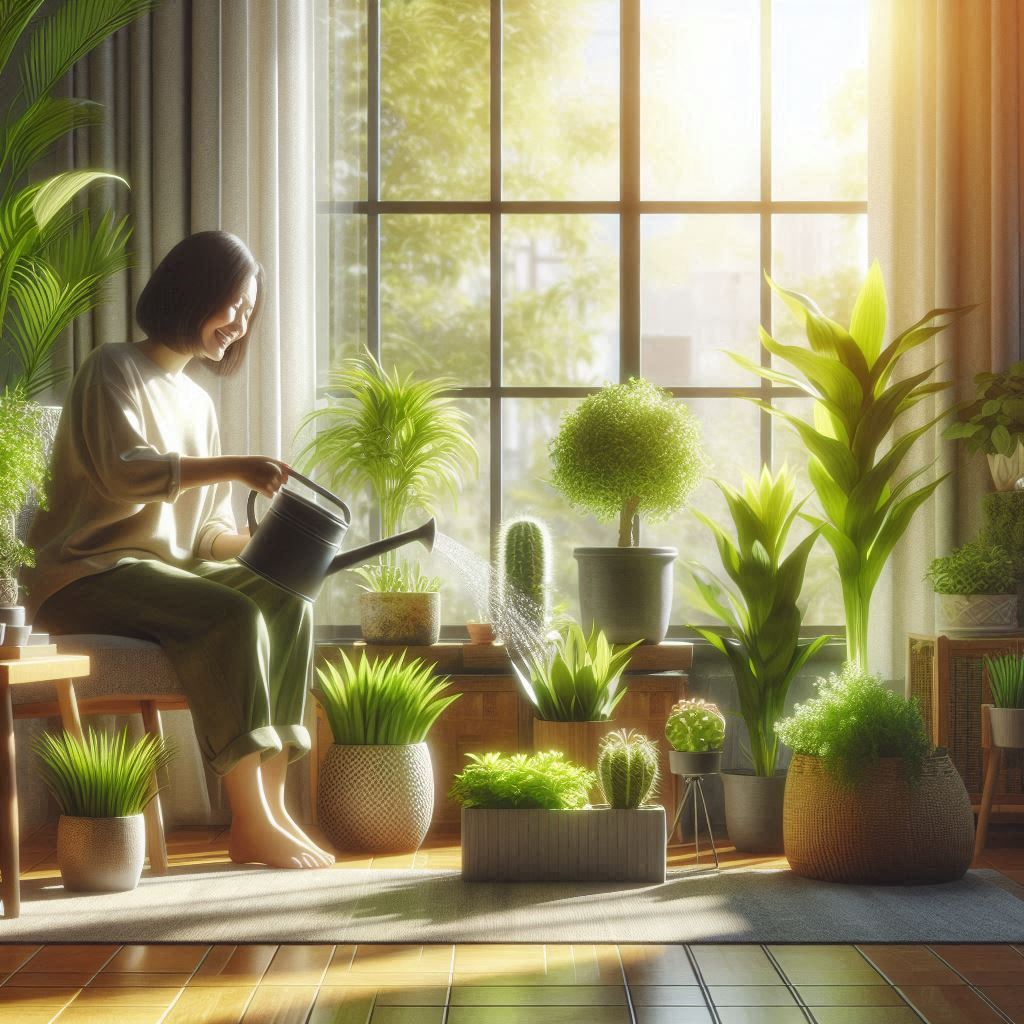
Growing lucky bamboo in water
- Choose a container. Use a vase or dish at least 3–4 inches deep. Opaque or colored containers slow algae growth compared with clear glass.
- Add support. Put 1–2 inches of rinsed pebbles, river stones, or glass beads in the bottom to anchor the stalks.
- Set the stalks. Push the stalk bases gently into the pebbles so they stand upright.
- Add water. Fill until the roots and at least 1 inch of the stalk are covered. Use filtered, distilled, or rainwater, or tap water that has sat out overnight.
- Place it in bright, indirect light and refresh the water every 1–2 weeks, or sooner if it turns cloudy or smells.
Growing lucky bamboo in soil
- Pick a pot with drainage holes about 2 inches wider than the root mass.
- Fill with a well-drained indoor or tropical potting mix. A good-quality bagged mix works; our guide to different types of soil explains why drainage matters.
- Plant the stalks at the same depth the roots sat in water, and firm the mix around them. Stake tall stalks until the roots anchor.
- Water thoroughly, let the pot drain fully, and empty the saucer.
- Water again only when the top 1 inch of soil feels dry.
You can buy indoor bamboo plants and supplies here:
Light: The Factor Most People Get Wrong
Lucky bamboo is often sold as a “no light” plant, but it still needs light to photosynthesize. In very dim corners it survives for a while, then stretches, pales, and fades. Aim for:
- A spot near an east- or north-facing window, or a few feet back from a bright south or west window.
- No direct afternoon sun on the leaves; it causes brown, scorched patches.
- A full-spectrum LED grow light 12–18 inches above the plant for 10–12 hours a day if your room has no usable window light.
Lucky bamboo grows toward light, so rotate the container a quarter turn every week or two to keep stalks straight. (Spiral stalks are made by growers who rotate the light source deliberately over months.)
Watering and Water Quality
Dracaenas are sensitive to fluoride and to salts that build up from tap water and fertilizer. The classic symptom is brown, crispy leaf tips. To prevent it:
- Use filtered, distilled, or rainwater when you can.
- If you use tap water, let it sit in an open container overnight so chlorine can dissipate. This does not remove fluoride.
- Every time you change the water, rinse the pebbles and wipe the inside of the container to remove algae and mineral film.
- For soil-grown plants, water deeply enough that some water runs out of the drainage holes, which flushes salts.
Fertilizing
Too much fertilizer is a more common problem than too little, and it shows up as yellowing leaves. Water-grown plants need only a liquid houseplant fertilizer at 1/4 of the label rate every other month. Soil-grown plants can take a diluted houseplant fertilizer monthly in spring and summer; skip feeding in late fall and winter when growth slows. Always follow the product label. For an overview of fertilizer types, see different types of fertilizers and their uses.
Pruning, Shaping, and Propagation

Cutting a stalk does not make that stalk grow taller from the cut. Instead, new leafy shoots sprout just below it. Use that habit to control height and shape:
- Trim offshoots that grow too long by cutting them back to 1–2 inches from the main stalk with clean, sharp scissors.
- Shorten a tall stalk by cutting just above a node (the ring on the stalk). New shoots will form near the top.
- Remove yellow leaves by pulling or snipping them off at the base.
To propagate: cut a healthy offshoot that has at least one node, strip the lowest leaves, and stand it in clean water. Roots usually appear in about 2–3 weeks. Once the roots are an inch or two long, you can leave it in water or pot it in soil.
Troubleshooting: Symptom, Cause, Fix
| Symptom | Likely cause | Fix |
|---|---|---|
| Yellow leaves | Too much direct sun, too much fertilizer, or poor water quality | Move out of direct sun, stop fertilizing for a few months, switch to filtered or distilled water. |
| Yellow stalk (starting at the bottom or top) | Rot from stagnant water, overfeeding, or old age | A yellow stalk does not turn green again. Remove it from the arrangement so the problem does not spread; save any green top as a cutting. |
| Brown, crispy leaf tips | Fluoride or chlorine in tap water, salt buildup, or very dry air | Use filtered or distilled water, rinse the container and pebbles, and keep away from heating vents. |
| Mushy, dark, or smelly stalk base | Root or stem rot | Remove affected stalks, clean the container, and start fresh with clean water. Cut healthy tops above the rot and re-root them. |
| Green slime in the vase | Algae fed by light hitting the water | Scrub the container, change water more often, and use an opaque container. |
| Pale, stretched, weak growth | Too little light | Move closer to a bright window or add a grow light. |
| Brown, scorched patches on leaves | Direct sun | Move to bright, indirect light; trim damaged leaves. |
| Fine webbing, stippled leaves, white cottony spots, or sticky residue | Spider mites, mealybugs, scale, or aphids | Wipe or rinse leaves; treat with insecticidal soap or neem oil according to the label. |
Seasonal Care Calendar (Indoors, US)
| Season | What to do |
|---|---|
| Spring (March–May) | Growth picks up. Resume light fertilizing, repot or move to soil if roots crowd the container, and take cuttings. |
| Summer (June–August) | Change water more often, since warm water goes stagnant faster. Keep out of hot direct sun. In zones 10–12 a plant can sit outside in shade; elsewhere keep it inside or bring it in before nights fall below 65°F. |
| Fall (September–November) | Taper feeding to a stop. Move away from windows that get cold at night and from heating vents once the furnace starts. |
| Winter (December–February) | No fertilizer. Water soil-grown plants less often. Keep above 60°F, away from drafty doors and cold glass, and watch leaf tips for dryness. |
Can You Grow True Bamboo Indoors?
You can try, but true bamboo is a demanding houseplant. Most species need several hours of strong light, consistently moist but well-drained soil, and higher humidity than a typical heated home provides. Indoors they often decline slowly, dropping leaves and producing weak new canes. If you want to try:
- Choose a small, clumping (not running) type and a large container with drainage holes.
- Give it the brightest spot you have, such as a south-facing window, or supplemental grow lights.
- Keep the soil evenly moist, never soggy, and raise humidity with a humidifier.
- Consider growing it in a container on a patio for the warm months and treating indoor time as a short-term stay.
For most homes, lucky bamboo or another easy-care plant is a better choice. See our list of low-maintenance indoor plants, or try snake plants or rubber plants for similar upright foliage. Browse more in our houseplants and flowers section.
Is Indoor Bamboo Safe for Pets?
Lucky bamboo is not pet-safe. The ASPCA lists Dracaena species, including the plant sold as “ribbon plant,” as toxic to cats and dogs because they contain saponins. Signs listed by the ASPCA include vomiting (sometimes with blood), depression, loss of appetite, drooling, and dilated pupils in cats. Keep the plant out of reach, and if a pet chews it, contact your veterinarian or the ASPCA Animal Poison Control Center at (888) 426-4435 (a consultation fee may apply).
By contrast, the ASPCA lists golden bamboo (Phyllostachys aurea), a true bamboo, as non-toxic to cats and dogs. Check the exact species of any plant before assuming it is safe.
FAQ
How often should I change the water for lucky bamboo?
Every 1–2 weeks is a good routine, and immediately if the water looks cloudy, smells, or turns green. Rinse the pebbles and container each time.
Why is my lucky bamboo turning yellow?
Yellow leaves usually mean too much sun, too much fertilizer, or poor water quality. A stalk that turns yellow is usually rotting or dying and will not recover, so remove it to protect the rest of the arrangement.
Can lucky bamboo grow in low light?
It tolerates lower light better than many houseplants, but it will slowly weaken in a dark room. Bright, indirect light, or a grow light, keeps it healthy.
How long does lucky bamboo live?
Lifespan varies with care. Plants kept in clean water with good light can last for years, and moving them to soil often extends their life. Taking cuttings lets you keep a plant going indefinitely.
Should I move my lucky bamboo from water to soil?
You don’t have to, but soil-grown plants are often sturdier over the long term. Move it in spring, use a pot with drainage holes and indoor potting mix, and water when the top inch dries.
How tall does lucky bamboo get indoors?
Most indoor stalks stay a few feet tall or less. Height is easy to control by cutting stalks above a node, which also encourages bushier new shoots.