The world’s rarest plants include the Middlemist’s Red camellia (only two known plants), the Wollemi pine (fewer than 100 wild trees in one Australian park), the Franklin tree and chocolate cosmos (both extinct in the wild and kept alive only in gardens), and the ghost orchid of southwest Florida. Most grow in a single valley, island, desert or mountain, which is exactly what makes them so vulnerable.

This guide covers 13 of the rarest plants on Earth: where each one grows in the wild, why it is rare, its conservation status, and whether a home gardener in the US can legally grow a cultivated form. A quick-reference table comes first, followed by a profile of each plant and answers to common questions.
Rare Plants at a Glance
| Plant | Where it grows wild | Status | Can US gardeners grow it? |
|---|---|---|---|
| Middlemist’s Red camellia | None known in the wild; two plants in London and New Zealand | Only two known specimens | No |
| Wollemi pine | Wollemi National Park, New South Wales, Australia | IUCN Critically Endangered | Yes, nursery-grown trees are sold as ornamentals |
| Franklin tree | Formerly the Altamaha River valley, Georgia | IUCN Extinct in the Wild | Yes, sold by specialty nurseries |
| Chocolate cosmos | Formerly central Mexico | Extinct in the wild | Yes, widely sold as plants and tubers |
| Ghost orchid | Southwest Florida swamps and western Cuba | Proposed for US Endangered Species Act listing (2025) | Never collect wild plants |
| Haleakalā silversword | Haleakalā volcano, Maui, Hawaii | Federally Threatened since 1992 | No |
| Corpse flower (titan arum) | Sumatra, Indonesia | IUCN Endangered | Botanic gardens only, in practice |
| Rafflesia arnoldii | Rainforests of Sumatra and Borneo | Genus widely threatened | No, it has never been grown away from its host vine |
| Jade vine | Philippine rainforests | Rare in the wild | Only in heated greenhouses or frost-free gardens |
| Welwitschia | Namib Desert, Namibia and Angola | Closely monitored | Rarely; a collector’s plant |
| Socotra dragon tree | Socotra, Yemen | IUCN Vulnerable | Rarely; a collector’s plant |
| Hydnora | Arid southern Africa | H. africana is IUCN Least Concern but rarely seen | No, it is a root parasite |
| Western underground orchid | Wheatbelt of Western Australia | Critically Endangered under Australian law | No |
Why Some Plants Are So Rare

A plant usually becomes rare for one of four reasons, and many rare species face several at once:
- A tiny natural range. Island and mountaintop endemics such as the Socotra dragon tree and the Haleakalā silversword evolved in one place and grow nowhere else.
- Dependence on a partner. Rafflesia needs a specific host vine, the western underground orchid relies on broombush shrubs, and the ghost orchid depends on particular fungi and host trees. Lose the partner and the plant goes too.
- Habitat loss and climate change. Logging, farming, drought and grazing shrink already small populations.
- Collecting and poaching. Showy rarities attract collectors. Poaching is a documented threat to the ghost orchid in Florida.
Several of the plants below survive only because gardeners and botanic gardens kept them in cultivation after they disappeared from the wild. That is one of the best arguments for growing rare plants responsibly, from legitimate nursery stock.
Rare Plants You Can Still Grow at Home
These three are extinct or nearly gone in the wild, yet nursery-propagated plants are legal and available in the US.
1. Chocolate Cosmos (Cosmos atrosanguineus)
Where it grew: central Mexico. Seed collected near Zimapán was introduced to gardens in 1902, and the species is now extinct in the wild.
Why it is special: deep maroon flowers with a cocoa-like scent. For about a century nearly every plant in cultivation was a single self-sterile clone, propagated by division and cuttings. Newer seed-raised cultivars such as ‘Choca Mocha’ have since been introduced.
Growing it: it is perennial in USDA zones 10 and 11. Elsewhere, grow it in containers or lift and store the tuberous roots over winter as you would dahlias. Give it full sun and well-drained soil, and avoid soggy conditions, which rot the roots.
2. Franklin Tree (Franklinia alatamaha)
Where it grew: a small area along the Altamaha River in Georgia. It was last confirmed in the wild in 1803 and is listed by the IUCN as Extinct in the Wild.
Why it is special: every Franklin tree alive today descends from seed collected by the naturalist William Bartram in the 1700s. It bears white, camellia-like fall flowers and colorful fall foliage, and grows roughly 10 to 30 feet tall.
Growing it: it is sold by specialty nurseries but has a reputation for being fussy. It wants acidic, sandy, well-drained soil and dislikes root disturbance and heavy, wet clay.
3. Wollemi Pine (Wollemia nobilis)
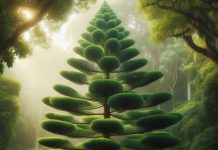
Where it grows: two sites deep in Wollemi National Park, New South Wales, Australia, with fewer than 100 wild trees. It is listed as Critically Endangered.
Why it is special: known only from fossils and thought extinct for around two million years, it was discovered alive in 1994. Its wild locations are kept secret to protect the trees from visitors and disease.
Growing it: a propagation program made nursery-grown trees available to gardeners worldwide, partly to reduce pressure on the wild population. Buying a cultivated tree is legal and helps fund conservation.
Rare Plants of the United States
4. Ghost Orchid (Dendrophylax lindenii)
Where it grows: swamps of southwest Florida, including the Fakahatchee Strand and Big Cypress area, and western Cuba.
Why it is rare: the plant is leafless, clinging to tree bark with green roots, and its white flower appears to float in the air. An estimated 1,500 plants remain in Florida, and fewer than half are mature enough to reproduce. In 2025 the US Fish and Wildlife Service proposed listing it under the Endangered Species Act, citing habitat loss, hydrology changes and poaching.
Can you grow it? Never remove a ghost orchid from the wild. It is very difficult to keep alive outside its habitat and is best admired on guided swamp walks or at botanic gardens.
5. Haleakalā Silversword (Argyroxiphium sandwicense subsp. macrocephalum)
Where it grows: the cinder slopes of Haleakalā volcano on Maui, at around 10,000 feet.
Why it is rare: it grows nowhere else on Earth. Grazing animals and souvenir collecting once pushed it close to extinction, and it has been federally listed as Threatened since 1992. Each plant forms a silvery rosette of leaves that reflects intense high-altitude sunlight, lives anywhere from a few years to 90 or more, then sends up a single tall stalk of hundreds of purplish flowers, sets seed and dies.
Can you grow it? No. See it in Haleakalā National Park and stay on marked trails, because the shallow roots are easily damaged by footsteps.
Rare Plants Around the World
6. Middlemist’s Red Camellia
Where it grows: nowhere in the wild that anyone knows of. It was brought to Britain from China in the early 1800s, and only two plants are known today: one in the conservatory at Chiswick House in London and one in New Zealand.
Why it is special: with just two known specimens, it is often called the rarest flower in the world. Despite the name, its flowers are a deep rosy pink rather than true red.
7. Corpse Flower (Amorphophallus titanum)
Where it grows: rainforests on limestone hills in Sumatra, Indonesia. It is listed by the IUCN as Endangered.
Why it is special: it produces the largest unbranched inflorescence in the plant world, reaching about 10 feet (3 m) tall. Blooms are infrequent and unpredictable, and the famous rotting-meat smell, which attracts carrion-feeding pollinators, peaks for just one evening. US botanic gardens often stream their blooms live because they draw such crowds.
8. Rafflesia (Rafflesia arnoldii)

Where it grows: remote rainforests of Sumatra and Borneo in Southeast Asia.
Why it is rare: Rafflesia has no leaves, stems or roots. It lives hidden inside a tropical vine (Tetrastigma) and appears only when its huge flower bud bursts through the host’s bark. R. arnoldii produces the largest single flower in the world, which can exceed 3 feet across and weigh more than 20 pounds, yet each bloom lasts only a few days. A 2023 study warned that most of the genus’s 42 species are threatened by forest loss, and no one has succeeded in growing Rafflesia away from its host.
9. Jade Vine (Strongylodon macrobotrys)
Where it grows: rainforests of the Philippines, where it is rare in the wild.
Why it is special: its claw-shaped flowers are an unusual turquoise color and hang in clusters that can reach about 10 feet long. In the wild they are pollinated by bats. Stems can climb more than 50 feet.
Can you grow it? Only where it stays warm all year. It needs temperatures above about 59°F (15°C), so in most of the US it is a heated-greenhouse plant. Some public gardens in California and Florida display it.
10. Welwitschia (Welwitschia mirabilis)

Where it grows: the Namib Desert of Namibia and southern Angola.
Why it is special: it grows just two leaves in its entire life. They lengthen continuously from the base and gradually split and fray into ribbons in the desert wind. Large plants are thought to be more than 1,500 years old. The species is closely monitored but not considered under immediate threat.
11. Socotra Dragon Tree (Dracaena cinnabari)

Where it grows: only on the Socotra archipelago of Yemen in the Arabian Sea, an island group so isolated that a large share of its plants grow nowhere else.
Why it is rare: the tree has a dense umbrella-shaped crown, grows up to about 30 feet tall, and bleeds a red resin long traded as “dragon’s blood.” It is listed as Vulnerable by the IUCN because few young trees survive to replace the old ones, a problem linked to drier conditions and grazing goats. Local planting efforts have established hundreds of protected saplings.
12. Hydnora (Hydnora africana)

Where it grows: dry regions of South Africa and Namibia. Related species, such as Hydnora triceps, are even more localized.
Why it is rarely seen: the whole plant lives underground as a parasite on the roots of shrubs. It surfaces only to flower, usually after rain, when a fleshy flower about 4 to 6 inches across pushes through the soil, smells of carrion and attracts beetle pollinators. H. africana is assessed as Least Concern, but most people never see one.
13. Western Underground Orchid (Rhizanthella gardneri)
Where it grows: a few sites in the Wheatbelt of Western Australia.
Why it is rare: this orchid spends its entire life below ground, even flowering beneath the soil surface in late fall and winter (May to July in Australia). It has no green leaves and gets its food through fungi linked to broombush shrubs. It is listed as Critically Endangered under Australian federal law and is not in cultivation.
Where the World’s Rarest Plants Are Found
Rare plants cluster in a few types of places. Knowing them helps explain why conservation money goes where it does.
| Habitat type | Why rare plants evolve there | Examples |
|---|---|---|
| Isolated islands | Long isolation lets species evolve with no relatives nearby | Socotra dragon tree, Haleakalā silversword |
| Tropical rainforests | Huge diversity, with many species tied to one partner or narrow range | Rafflesia, corpse flower, jade vine |
| Deserts | Extreme conditions favor slow, highly specialized plants | Welwitschia, Hydnora |
| Hidden refuges | Sheltered gorges and swamps preserve relict populations | Wollemi pine, ghost orchid |
| Gardens only | Species lost in the wild but saved in cultivation | Franklin tree, chocolate cosmos, Middlemist’s Red |
How to Enjoy Rare Plants Responsibly
- Buy only nursery-propagated plants. Ask where a rare plant came from. Legitimate sellers can tell you it was grown from seed, cuttings or tissue culture.
- Never collect from the wild. Removing protected plants is illegal in many places, including US national parks, and it directly harms small populations.
- Check import rules before ordering from abroad. Many orchids, cacti and other rare plants are regulated under CITES and US plant import rules, and live plants shipped into the US generally need proper permits and documentation.
- Visit botanic gardens. Many gardens keep rare species in conservation collections, and admission or membership fees support that work.
- Stay on trails in sensitive habitats. Silverswords and many orchids have shallow roots that are easily crushed.
If you want to start with easier plants before trying a collector’s species, our guides to cactus houseplants, types of palm trees and low-maintenance indoor plants are good places to begin. For an exotic flowering plant that is easy to grow in warm climates, see our hibiscus guide, or learn about the blue lotus flower, a water plant with a long history in Egyptian art.
Frequently Asked Questions
What is the rarest plant in the world?
Middlemist’s Red camellia is often named the rarest because only two plants are known, in London and New Zealand. Among wild plants, the Wollemi pine, with fewer than 100 trees in the wild, and the western underground orchid are among the rarest.
Where does the corpse flower grow naturally?
Only in the rainforests of Sumatra, Indonesia, where it grows on limestone hills. Plants in the US are grown in botanic garden greenhouses.
Can you grow a ghost orchid at home?
Not realistically. It needs very specific humidity, host trees and fungal partners, and wild plants must never be collected. Seeing it in its Florida habitat or a botanic garden is the responsible way to enjoy it.
Is the chocolate cosmos extinct?
It is extinct in the wild in Mexico but common in cultivation. You can buy plants or tubers from US nurseries and grow it as a perennial in zones 10 and 11, or as a lifted tuber elsewhere.
How many Middlemist’s Red plants are left?
Two known plants: one at Chiswick House in London and one in New Zealand.
Are rare plants legal to buy?
Often yes, if they are nursery-propagated and sold with any required paperwork. Wild-collected plants of protected species, and plants imported without proper permits, are not.
The Bottom Line
The world’s rarest plants grow in places most of us will never reach: a single Hawaiian volcano, a Sumatran rainforest, a secret Australian gorge. Yet a few, like the Franklin tree, Wollemi pine and chocolate cosmos, survive today largely because gardeners kept growing them. Buy cultivated stock, leave wild plants where they are, and explore more flowering plants in our plants and flowers section.