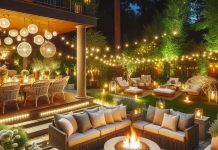
The best small yard landscaping ideas make space feel larger by working upward, layering plants by height, choosing shrubs and trees for their mature size, and keeping one clear view across the yard. Start by deciding how you want to use the space, then pick two or three of the tactics below instead of trying to fit every feature in.
This guide covers 12 space-making ideas, a comparison table to help you choose, a list of compact plants with verified sizes and hardiness zones, and a planning checklist. For broader inspiration on bigger lots, see our main guide to landscaping ideas for the backyard.

Small Yard Landscaping Ideas at a Glance
Use this table to shortlist ideas that match your yard size and the time you have for upkeep.
| Idea | Space needed | Maintenance | Best for |
|---|---|---|---|
| Plan zones and sightlines | Any | None once done | Every small yard, before buying anything |
| Vertical gardening | A wall, fence, or trellis | Medium (watering, tying in vines) | Narrow side yards, patios, privacy |
| Raised beds and levels | Small footprint per bed | Low to medium | Flat yards, poor soil, edibles |
| Layered planting | Border at least a few feet deep | Medium | Adding depth along fences |
| Dwarf and columnar plants | Minimal | Low (less pruning) | Tight beds, corners, entries |
| Paving, gravel, or groundcover instead of lawn | Any | Low | Shady or heavily used yards |
| Containers | Very little | Medium to high (frequent watering) | Patios, renters, seasonal color |
| Limited color palette | Any | None | Making a yard feel calm and unified |
| Rock or gravel garden | Small bed or corner | Low | Sunny, dry spots and slopes |
| Small water feature | A few square feet | Medium (pump, topping up) | A focal point and masking noise |
| Landscape lighting | None | Low | Evening use and extra depth at night |
| Compact, multi-use furniture | Patio or deck area | Low | Entertaining in limited space |
1. Plan Zones and Sightlines First

In a small yard every square foot has a job, so decide what those jobs are before you plant. Common uses are dining, a play area for kids or pets, growing food, and a quiet seat. Most small yards can handle two uses comfortably; three or more usually feels cramped.
- Emphasize the longest line. Run a path, a border, or the pattern of your paving along the yard’s longest dimension, often the diagonal. The eye follows it and the yard reads as larger.
- Point seating at the widest view. Place your main chair or bench where you see the most of the yard, not facing a fence a few feet away.
- Give the eye a destination. A single focal point at the far end, such as a small tree, a planter, or a bench, draws attention through the space.
- Don’t block the middle. Keep the center fairly open and push height to the edges so you can see across the whole yard.
- Leave some sky open. If you add a pergola or shade sail, cover only part of the yard so the rest stays open overhead.
2. Go Vertical
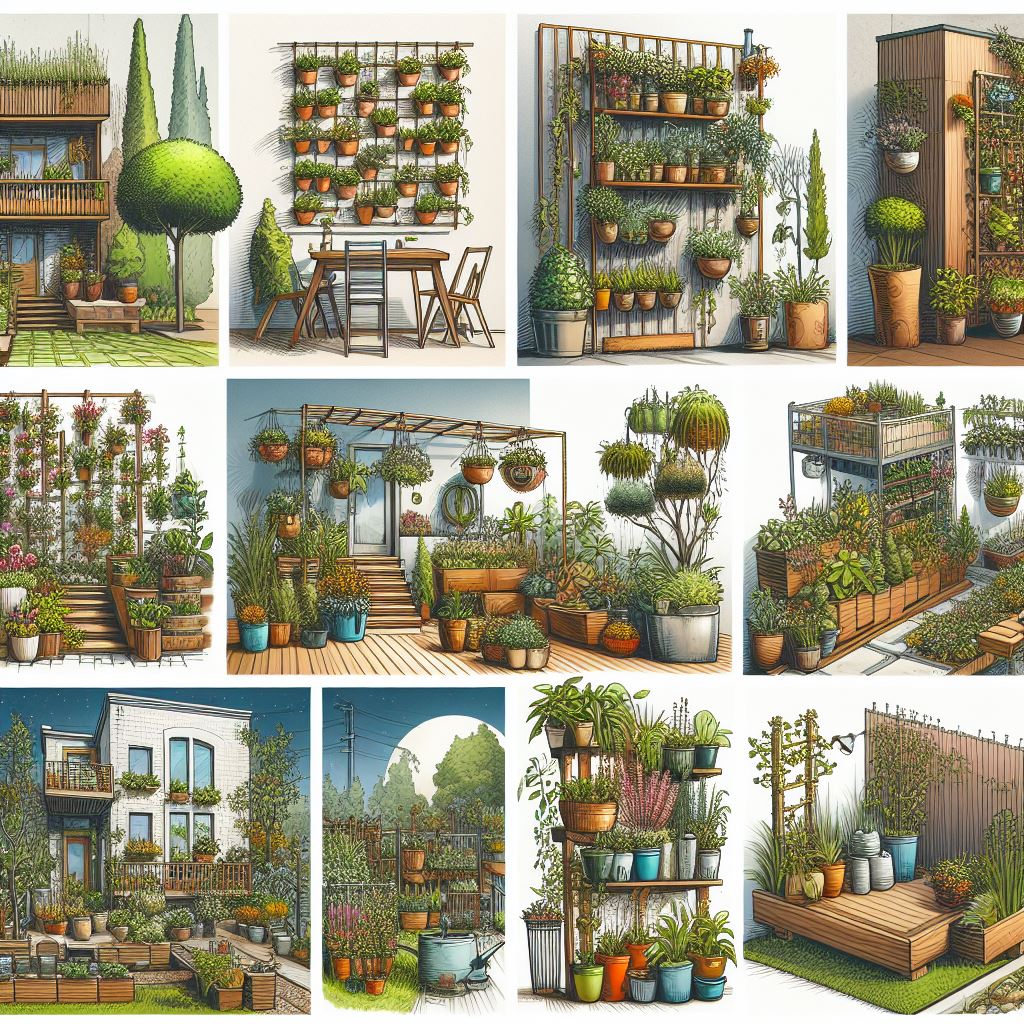
When ground space runs out, walls and fences become planting space. Vertical growing adds greenery without taking up floor area, and a planted fence softens hard boundaries that make small yards feel boxed in.
- Trellises and vines: Train climbers such as clematis, climbing roses, or annual vines like black-eyed Susan vine up a trellis or arbor. Check how vigorous a vine is before planting; trumpet vine and wisteria can overwhelm small structures.
- Wall planters and pocket systems: Mount planters on a fence for herbs, trailing annuals, or succulents.
- Tiered stands and gutter gardens: A tiered plant stand on wheels can be moved to follow the sun. Lengths of gutter mounted on a fence, with drainage holes drilled, work well for shallow-rooted greens.
- Espalier: Fruit trees and some shrubs can be trained flat against a wall or wire frame, giving you a tree’s interest in a few inches of depth.
For step-by-step methods and plant choices, see our complete guide to vertical gardening.
3. Create Different Levels
Changes in height add interest and help divide a small space without walls. Raised beds, a step up to a deck, or a low terrace create distinct areas while keeping sightlines open.
- Raised beds give you good soil in yards with clay or compacted ground and keep edibles tidy. Our tips for a successful raised bed garden cover materials, soil, and placement.
- Built-in seating on the edge of a raised bed or retaining wall does two jobs in one footprint.
- Slopes can be terraced with low retaining walls. On mild slopes, groundcover can hold soil without major construction.
4. Layer Plants From Back to Front
Layering means arranging plants in rows by height: taller shrubs or columnar evergreens at the back, medium shrubs and perennials in the middle, and low groundcovers or edging plants at the front. Seeing several layers at once tricks the eye into reading more depth than the bed really has.
- Use narrow, upright plants at the back so the bed doesn’t need to be deep.
- Repeat the same plant two or three times along a border; repetition looks intentional and calm.
- Mix evergreen structure with seasonal flowers so the bed still looks full in winter.
- Use fine-textured plants (small leaves, grasses) toward the far end and bolder leaves near your seat. Fine textures tend to look farther away.
5. Choose Plants for Their Mature Size
The most common small-yard mistake is planting a shrub or tree that will outgrow its spot. Always check the mature height and width on the plant tag, then plant so that size fits without constant pruning. Dwarf, compact, and columnar cultivars are bred for exactly this situation.
The table below lists compact plants that suit small yards. Sizes are typical mature dimensions from the sources noted in each description; growth varies with climate and conditions.
| Plant | Mature size (H x W) | USDA zones | Sun |
|---|---|---|---|
| Sky Pencil Japanese holly (Ilex crenata ‘Sky Pencil’) | 4–10 ft x 1–3 ft | 6–8 | Full sun to part shade |
| North Pole arborvitae (Thuja occidentalis) | 10–15 ft x 3–5 ft | 3–8 | Full to part sun |
| Dwarf Korean lilac (Syringa meyeri ‘Palibin’) | 4–5 ft x 5–6 ft | 3–7 | Full sun |
| Little Lime panicle hydrangea (Hydrangea paniculata) | 3–5 ft x 3–5 ft | 3–9 | Full to part sun |
| Green Velvet boxwood (Buxus ‘Green Velvet’) | 3–4 ft x 3–4 ft | 4–9 | Full to part sun |
| Karl Foerster feather reed grass (Calamagrostis x acutiflora) | About 4–5 ft x 2 ft | 3–9 | Full sun to part shade |
| Crimson Queen Japanese maple (Acer palmatum var. dissectum) | 8–10 ft x 10–12 ft | 5–9 | Part shade to full sun |
| Little Gem southern magnolia (Magnolia grandiflora) | 15–20 ft x 8–10 ft | 7–9 | Full sun to part shade |
Size sources: Purdue Arboretum and Gardenia.net (Sky Pencil), Proven Winners (North Pole, Little Lime), University of Minnesota (Palibin lilac), Monrovia (Green Velvet), Perennials.com (Karl Foerster), Gardenia.net (Crimson Queen), and NC State Extension (Little Gem).
How to use the list: columnar plants like Sky Pencil holly and North Pole arborvitae give height and privacy in a narrow strip. Rounded shrubs such as boxwood and dwarf lilac fill the middle layer. Crimson Queen is wider than it is tall, so give it a corner or use it as the single focal tree. Little Gem is the largest here and works best as the one tree in a warm-climate yard.
6. Rethink the Lawn: Paving, Gravel, or Groundcover
A small patch of grass can be more work than it is worth: it still needs mowing and edging, and it wears quickly where people walk. Most turfgrasses also need plenty of sun, which small, fence-shaded yards often lack.
- Pavers or flagstone make a dry, usable floor for dining and seating. Larger pavers with fewer joints tend to look calmer and less busy in a small space.
- Gravel drains well, is inexpensive to install yourself, and works in irregular shapes. Use edging so it stays put.
- Groundcover between stepping stones softens hardscape. Low plants such as creeping thyme for sun or dwarf mondo grass for shade fill gaps between pavers.
- Keep hardscape simple. Use one or two materials at most. Too many surfaces chop a small yard into pieces.
If you do keep grass, a crisp, simple shape such as a rectangle or circle looks deliberate and is easier to mow than leftover strips.
7. Use Containers as a Movable Garden
Containers let you garden on a patio, change the look each season, and take plants with you if you move. They also raise plants closer to eye level, which helps in tight spaces.
- Choose fewer, larger pots over many small ones. Large containers hold more soil, dry out more slowly, and look less cluttered.
- Group pots in odd numbers with varied heights for a planted look.
- Every container needs drainage holes.
- Combine a tall plant, a filler, and a trailing plant in one pot, and match plants by sun and water needs.
- Check how much sun the spot really gets: full-sun plants generally need 6 or more hours of direct sun a day.
8. Choose Colors Wisely
A limited color scheme makes a small yard feel calm and unified. Pick two or three main flower or foliage colors and repeat them, then let green be the background.
- Match your home’s style. Traditional homes suit classic combinations such as white, pink, and deep green. Modern homes often look best with a restrained palette of greens, grays, and one accent color. Cottage gardens can handle more mixing, but still benefit from repeating a few colors.
- Cool colors recede. Blues, purples, and silvers seem to sit farther away, so they work well at the far end of a yard to add apparent depth.
- Warm colors advance. Reds, oranges, and yellows draw the eye and feel closer, so use them near seating or as a single focal accent.
- Use white for evening. White and silver plants stay visible at dusk and brighten a shady corner.
9. Build a Small Rock or Gravel Garden
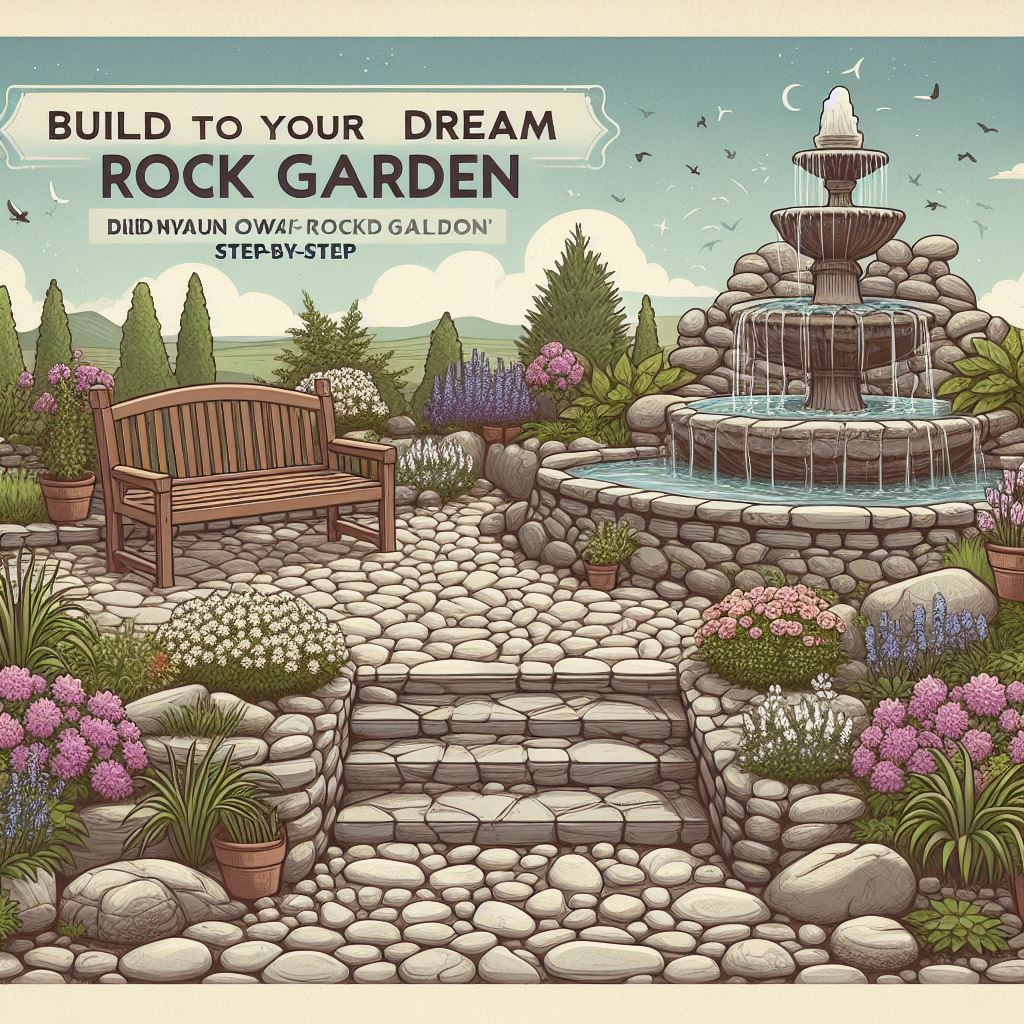
A rock garden packs a lot of texture into a small, low-maintenance bed and suits sunny, dry corners and gentle slopes.
- Plan the design. Choose a sunny spot with good drainage and sketch where larger rocks will sit.
- Prepare the ground. Remove weeds and grass, and loosen the soil. In heavy clay, mix in gravel or build the bed up slightly to improve drainage.
- Choose rocks. Use one type of local stone in a few sizes for a natural look.
- Set the rocks. Bury each rock partly so it looks rooted rather than placed on top.
- Pick plants. Low, drought-tolerant plants such as sedums, creeping thyme, and other alpine or rock-garden perennials suit the gaps.
- Finish. Top-dress with gravel to suppress weeds and keep plant crowns dry.
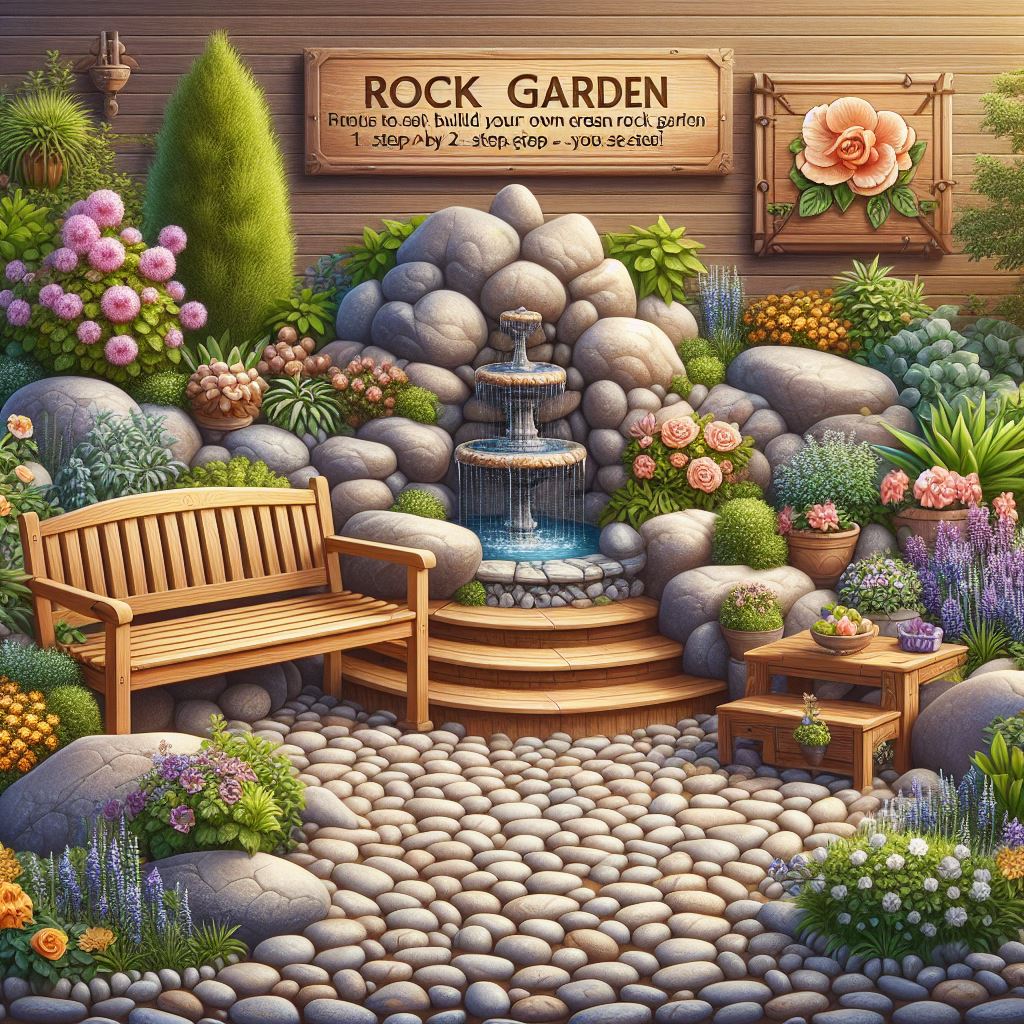
10. Add a Small Water Feature
Even a small fountain or bubbling urn gives a small yard a focal point, and the sound of moving water can soften street or neighbor noise. Pondless kits, where water recirculates from a hidden underground reservoir, take little space and have no open pond to maintain. A simple self-contained tabletop or wall fountain needs only a nearby outdoor outlet or a solar pump.
Place the feature where you can see and hear it from your seat, and check it regularly to top up water lost to evaporation.
11. Light the Yard for Evenings
Lighting extends the hours you can use a small yard and adds depth at night. Lighting the far edges, such as a fence, tree, or planter at the back, makes the boundary seem farther away.
- Uplight one focal point, like a small tree or textured wall, instead of lighting everything evenly.
- Use path or step lights for safety on changes in level.
- String lights over a seating area create a ceiling without blocking the sky by day.
- Solar fixtures need no wiring, though they depend on how much sun the fixture gets during the day.
12. Pick Compact, Multi-Use Furniture
Furniture often takes up more of a small yard than plants. Choose pieces that are comfortable but in scale with the space.
- Folding or stackable chairs can be stored when not in use.
- Built-in benches along a wall or raised bed save floor space.
- Storage benches and ottomans hold cushions and tools.
- A small round or half-round table fits against a wall and is easy to move around.
- An outdoor mirror on a fence, angled toward plants, can visually double a planting. Place it so it doesn’t confuse birds.
For clean-lined layouts and furniture that suits contemporary homes, see our ideas for a small modern backyard.
Small Yard Planning Checklist
- Measure the yard and sketch it to scale, including doors, windows, utilities, and existing trees.
- Track sun and shade at morning, midday, and afternoon.
- Note where water drains or puddles after rain.
- List the two or three uses the yard must serve.
- Mark the main view from the house and from your seat, and choose one focal point.
- Decide how much lawn, if any, you want to keep.
- Choose one or two hardscape materials and a two- or three-color plant palette.
- Look up your USDA hardiness zone and pick plants whose mature size fits each spot.
- Check HOA rules and local codes for fences, structures, and patios.
- Call 811 before digging so underground utility lines can be marked.
- Build in phases: hardscape first, then trees and shrubs, then perennials and containers.
Looking for visual examples organized by goal and budget? Browse our backyard landscaping pictures, or explore more guides in our landscape section.
FAQ
How can I make a small yard look bigger?
Keep the center open and push height to the edges, run paths or paving along the longest line, use a limited color palette with cooler colors at the far end, and add one focal point that draws the eye through the space. Lighting the back boundary at night also adds depth.
Should I keep grass in a small yard?
It depends on how you use the yard. If kids or pets need a soft surface and the yard gets plenty of sun, a small lawn in a simple shape can work. If the yard is shady or used mainly for sitting and dining, pavers, gravel, or groundcover are usually lower maintenance and more practical.
What trees are good for small yards?
Look for trees and large shrubs whose mature width fits your space. Columnar evergreens such as North Pole arborvitae, compact Japanese maples like Crimson Queen, and in warm climates (zones 7–9) Little Gem southern magnolia are common choices. Always check the mature size and plant far enough from the house and fences.
How do I add privacy without making a small yard feel closed in?
Use narrow, upright plants or a trellis with vines instead of a solid wall of shrubs. Screen only the specific view you need to block, such as a neighbor’s window, and leave other areas open so the yard still feels airy.
What colors make a small garden look bigger?
Cool colors such as blue, purple, and silver tend to recede, making a boundary look farther away. Repeating a small number of colors throughout the yard also makes the space feel unified rather than busy.
How much maintenance does a small yard need?
Less than a large one, but containers and vertical plantings can need more frequent watering than in-ground beds. Choosing dwarf plants that won’t need constant pruning, mulching beds, and replacing a high-upkeep lawn with paving or groundcover all reduce the work.